Waterfowl Tips & Tactics
Where Should the Landing Hole Be in a Duck Decoy Spread?
Arkansas County Guide Service • Decoy Placement
Home / Waterfowl Tips / Decoy Placement
The landing hole is the open area you leave for birds to finish. Its position matters more than whether the decoys form a perfect U or J. An opening can look good from the blind and still be awkward for a flock approaching from downwind.
Start with three things together: the birds’ preferred location, the actual wind, and cover that lets hunters stay hidden. Then place decoys around an opening that fits those conditions. Treat the first few flocks as information about the setup.
Quick Takeaway
Place the opening where ducks can approach into the wind, within your effective range, and where the blind stays concealed. Keep the approach lane clear.
Choose the Location Before Drawing the Spread
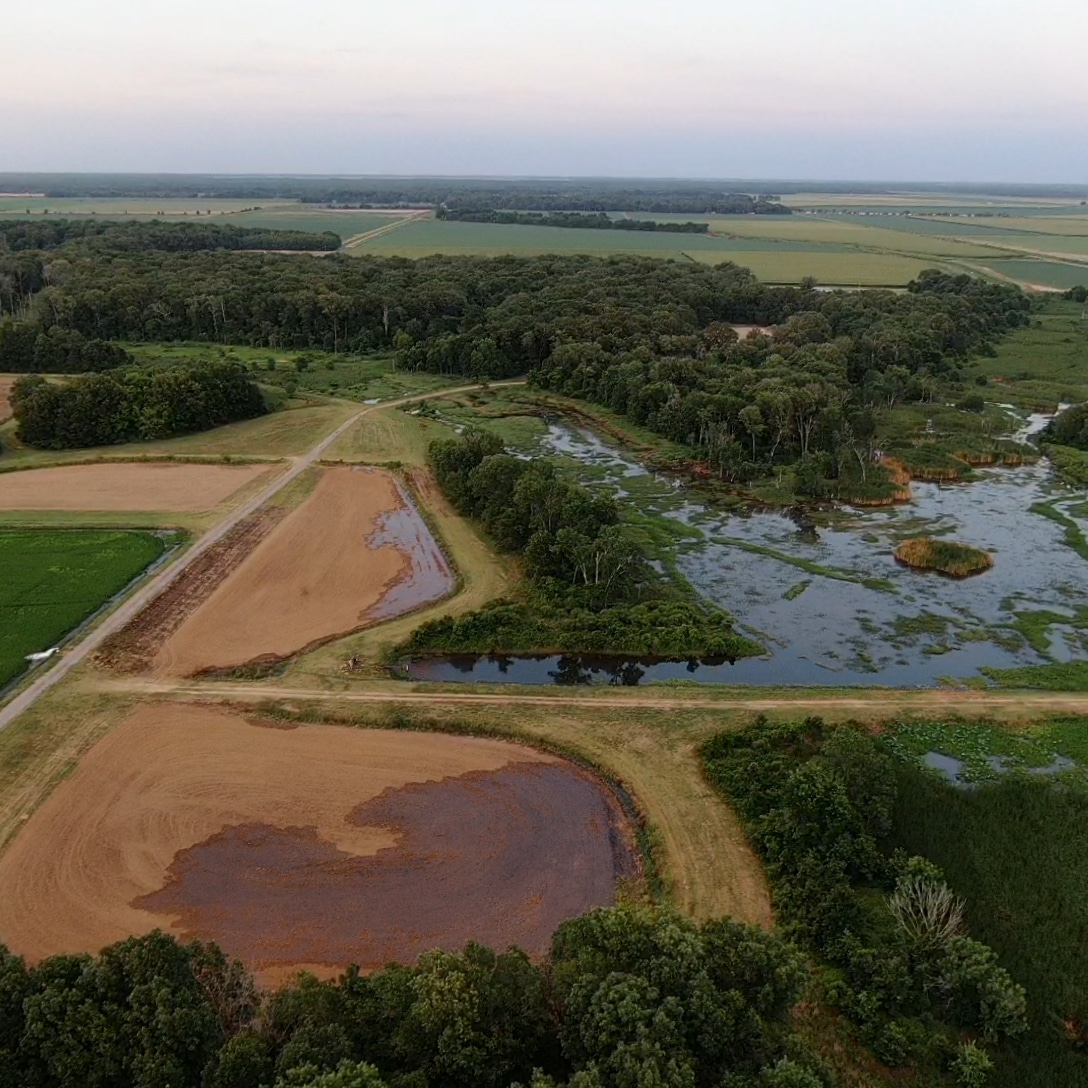
Watch where birds settle when the field is undisturbed. Water depth, accessible food, shelter, and nearby activity can make one section more attractive than another. A clear landing pocket in a part of the field ducks do not want to use may receive very little attention.
Use scouting to narrow the location, then check whether access and concealment make it workable. Our guide to scouting without disturbing birds covers observing landing preferences while keeping the concentration comfortable.
Picture the Final Approach Into the Wind
Ducks commonly finish into the wind. Stand at the proposed blind and picture a flock coming from the downwind side toward the opening. That line should give birds a clear route rather than lead them through a wall of decoys.
Wind at your back is a useful starting position when the cover allows it. A crosswind arrangement can also work. Choose the hide and pocket together; do not trade good concealment for a rigid wind rule. Check the wind at water level, where nearby trees or levees may influence it.
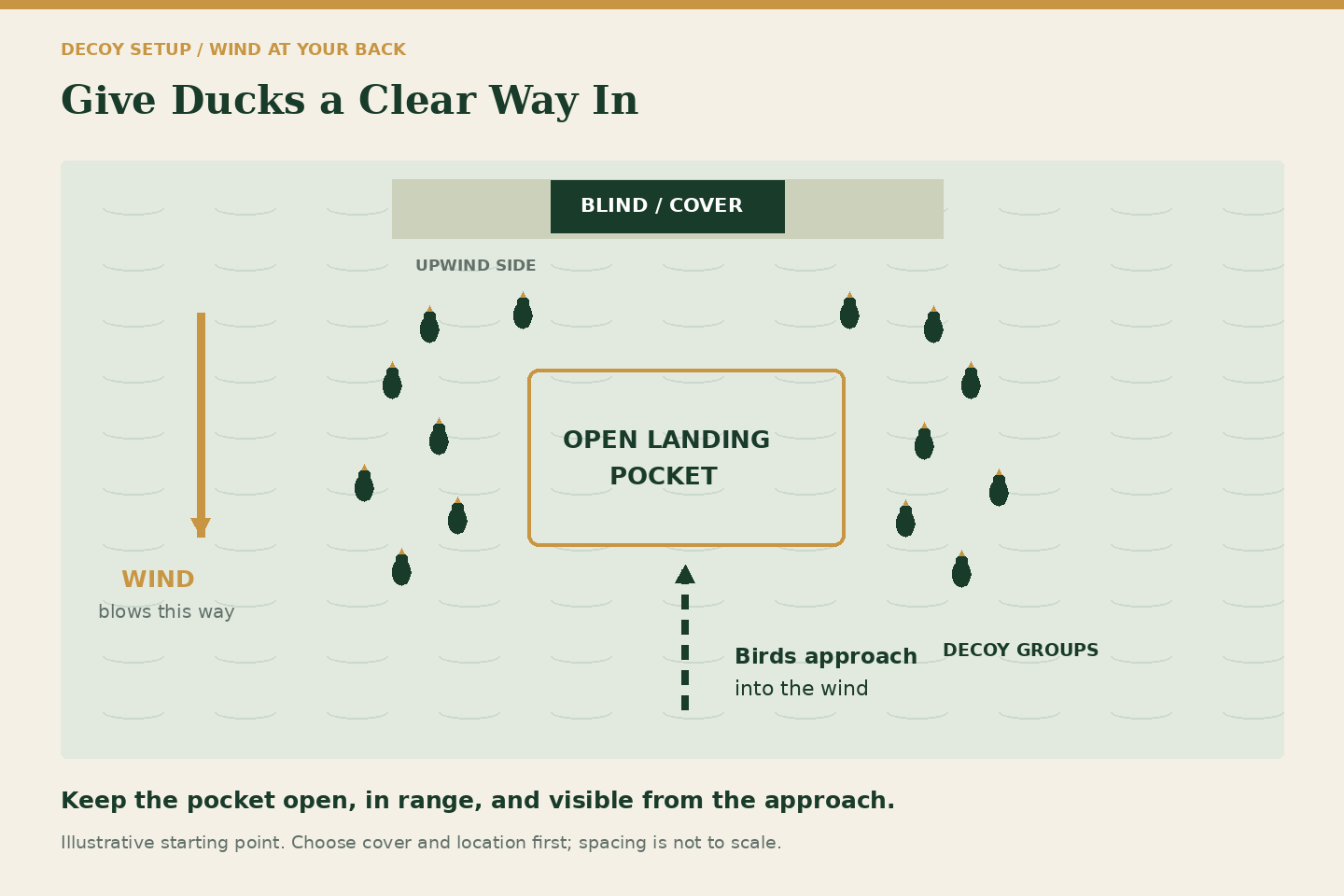
One starting layout when the wind is at your back. Gold indicates wind; the dashed green arrow indicates the final approach. Illustration is not to scale.
Keep the Entire Opening in a Useful Position
Think about the near edge, far edge, and sides of the pocket. If the far edge is outside your effective range, birds can land in the opening and still offer no responsible shot. Establish distance references before the hunt and agree on shooting lanes with the group.
There is no single distance that suits every hunter, load, habitat, and approach. Position the pocket for the shots you can make reliably, while allowing clear identification and safe angles. Avoid placing it where hunters must swing across one another.
Leave Room for Birds to Finish
Leave a genuine opening between decoy groups. A narrow gap that looks adequate for one bird may be less inviting to a larger flock. Keep the entry into that space open as well as its center.
Use loose groups to define the edges without building an unbroken line across the approach. In stronger wind, check that floating decoys do not drift together or close the gap. In calmer conditions, birds may arrive from different directions, so watch actual approaches instead of expecting one flight path.
Use the Outside Edge as Feedback
If multiple groups land short or on the same outside corner, ask what made that spot easier. It may be the first clear opening they encountered, a preferred patch of water, or a route that avoids the blind.
Open that approach, move a crowded cluster, or shift the intended pocket toward the preference when concealment and range permit. Do not fill every outside opening automatically. The flock may be showing you that the planned location needs to change.
Rebuild the Pocket After a Meaningful Wind Shift
The opening that worked earlier can become a crosswind or downwind finish after conditions change. Reorient decoy groups as needed, and check the blind from the new approach. Moving only the decoys may leave hunters exposed.
Keep practical retrieval access in mind too. A pocket should fit the hunt as a whole, including safe movement and the conditions you will face after a shot. Read hunting ducks and geese in the same field when arranging a mixed spread.