Waterfowl Tips & Tactics
How to Set a Duck Decoy Spread for the Wind
Arkansas County Guide Service • Decoy Setup
Home / Waterfowl Tips / Decoy Setup
A duck decoy spread should give birds a clear approach into the wind and an open place to land within your effective shooting range. The shape matters less than how the landing pocket, wind, cover, and birds’ preferred location work together.
In Arkansas rice fields and open water, yesterday’s setup may need a different orientation this morning. Start with the conditions in front of you, then watch how the first birds respond.
Quick Takeaway
Arrange decoys around an open landing pocket, plan for an into-wind approach, and choose concealment that lets you stay hidden. Adjust the spread when the wind or the birds tell you to.
Start With the Wind
Check wind direction at the blind before placing decoys. Ducks commonly make their final approach into the wind, so picture that flight path from the downwind side of the spread toward the landing pocket.
Wind at your back can bring birds toward you on the final approach, but it is not a rule worth sacrificing good cover for. A crosswind setup can work well when it keeps the blind concealed and the landing area in range. Avoid setting up where the likely approach carries birds directly over exposed hunters.
Pay attention to what the wind is doing at water level. A treeline, levee, or sheltered corner can produce conditions different from the forecast. Watch ripples, grass, and the way floating decoys sit before deciding where the pocket belongs.
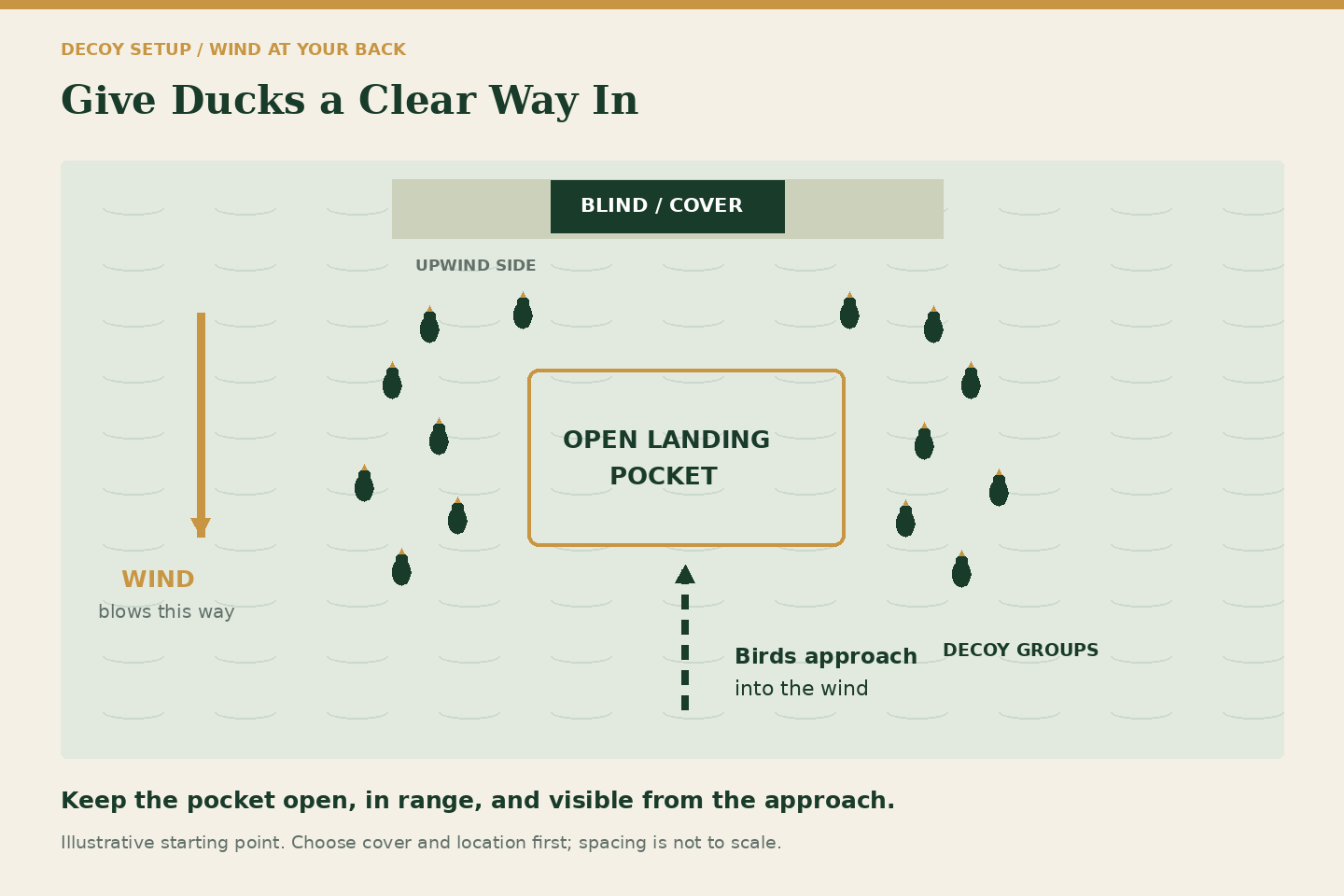
A starting layout with wind at your back. Gold shows wind direction; the dashed green arrow shows the final approach. Illustration is not to scale.
Leave a Clear Landing Pocket
The pocket is an opening between decoy groups, not another place to crowd with blocks. Leave enough space for the flock you expect and keep a clear route into that opening from downwind.
Place the opening where you can judge distance confidently. A decoy at a measured distance can help establish a reference before the hunt, but a spread never replaces knowing your effective range and choosing responsible shots.
Keep decoys out of the immediate approach lane. If birds repeatedly land on an outside edge, that may be the first comfortable opening they see. Move a few decoys and make the intended pocket easier to find.
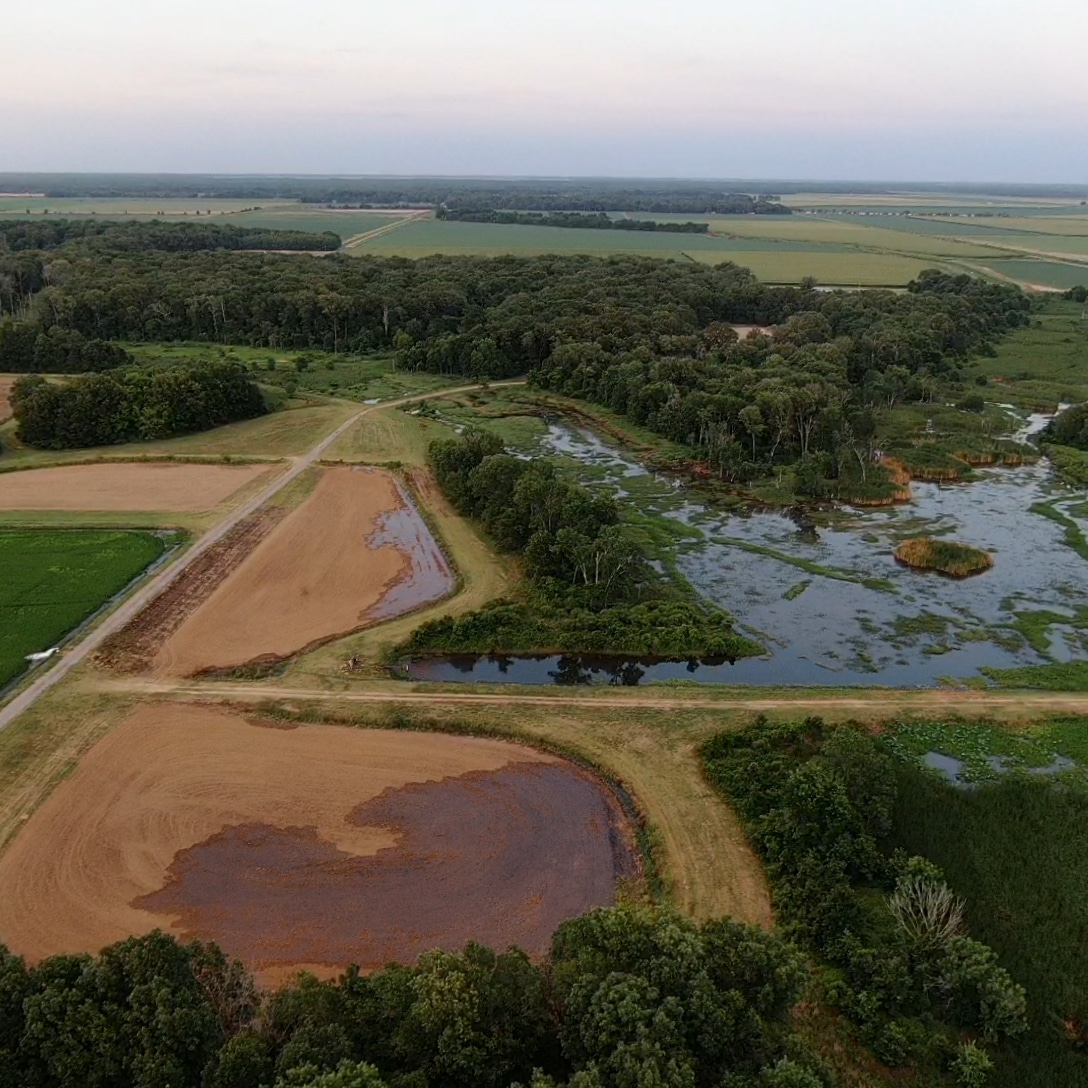
Location, water, cover, and wind all influence where a spread belongs.
Use Groups Instead of a Perfect Pattern
A loose U or J can be a useful starting point on open water. The purpose is to guide attention toward an opening, not to draw a perfect letter. Vary spacing and make small groups that resemble birds feeding or resting in the habitat you are hunting.
In a flooded field, keep the pocket connected to the area birds already prefer. A tidy spread in the wrong part of the field will not solve a location problem. Scouting and watching where birds land should come before adding more decoys.
For a mixed spread, read Hunting Ducks & Geese in the Same Field for more on arranging both species without blocking the approach.
Adjust for Calm or Strong Wind
On a calm morning, birds have more freedom to approach from different directions. Keep the landing area obvious and prioritize concealment. Motion on still water can help a spread look active, but watch whether birds respond positively instead of assuming more movement is better.
In stronger wind, check anchors and keep decoys from piling together or washing into the landing pocket. Sheltered water may offer a more comfortable landing area, provided it is somewhere the birds want to be.
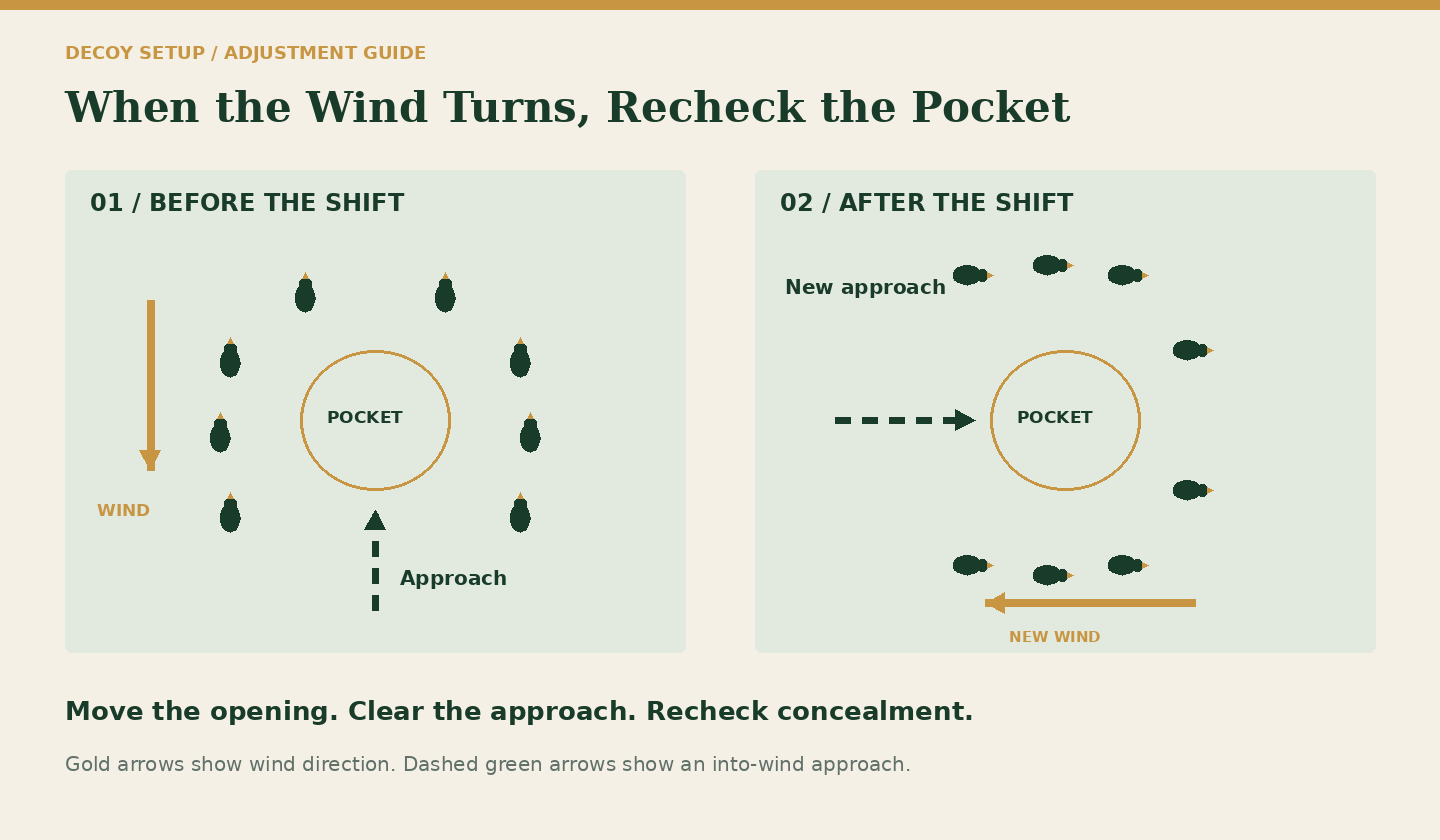
When the wind shifts, reorient the opening and recheck the blind from the new approach. Decoy positions are illustrative.
Read the First Few Flocks
Watch where birds turn, how low they get, and where they try to land. If several flocks work the same outside corner, adjust toward that pattern. If birds flare at the blind, check exposed faces, movement, and cover before rebuilding the spread.
Make one change at a time when practical. Moving the pocket, reducing a crowded edge, or correcting the blind position can tell you more than changing everything at once. For more on those signals, read How to Read Ducks Working Your Decoy Spread and Why Ducks Circle But Won’t Finish.