Ducks of Arkansas: A Stuttgart Hunter’s Identification Guide
Arkansas County Guide Service • Waterfowl Hunting
Spend enough mornings hunting around Stuttgart and you learn to identify ducks before you ever see the color of their feathers. Size, shape, wingbeat, flock behavior, call and the way a bird approaches a field can tell an experienced waterfowl hunter a lot. That matters because the Arkansas Grand Prairie is not a one-species show. Mallards may get most of the attention, but throughout the migration we see everything from pintails and gadwalls to teal, shovelers, wigeon and diving ducks.
Good duck identification starts before the birds are close enough to shoot.Here are the ducks hunters are most likely to encounter in and around Stuttgart, Arkansas.
Mallard
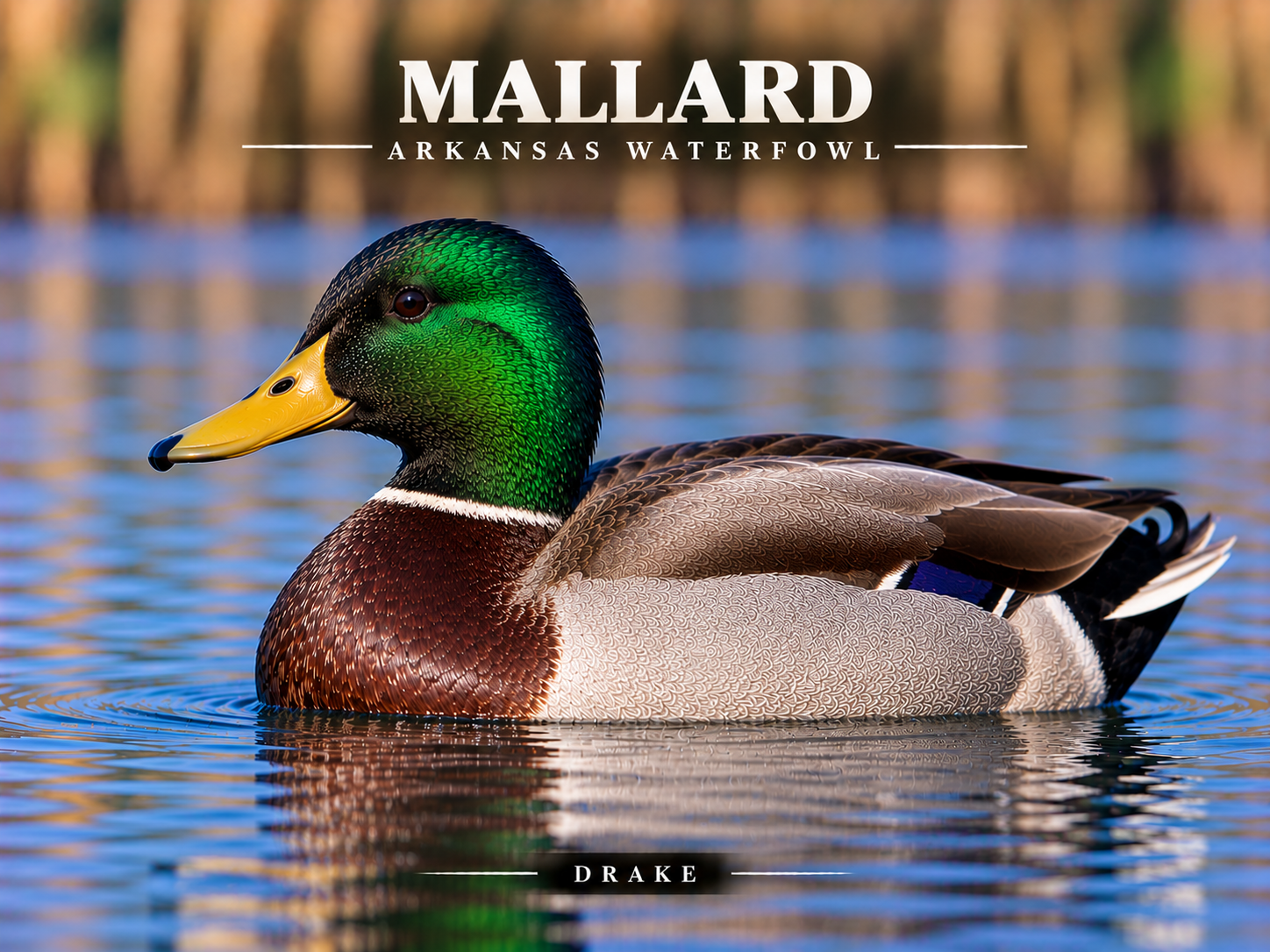
Mallards are the duck Stuttgart is famous for.
A mature drake is easy to recognize on the water with his glossy green head, white neck ring, chestnut breast and gray body. Hens are mottled brown with an orange-and-dark bill. Both sexes show a blue-violet speculum bordered in white. But in the timber before daylight, color is not what identifies them.
Mallards are large-bodied puddle ducks with a strong, deliberate wingbeat. Their familiar quacks and feeding chatter are another giveaway. When they work a spread, they’ll often make wide passes before dropping lower and committing. Around Stuttgart we encounter mallards in flooded timber, buckbrush, swamps, oxbows and flooded agricultural fields.
“Learn the size, shape, wingbeat and voice of a duck. If you have to wait until you can see feather color to know what it is, you still have some learning to do.”
Gadwall
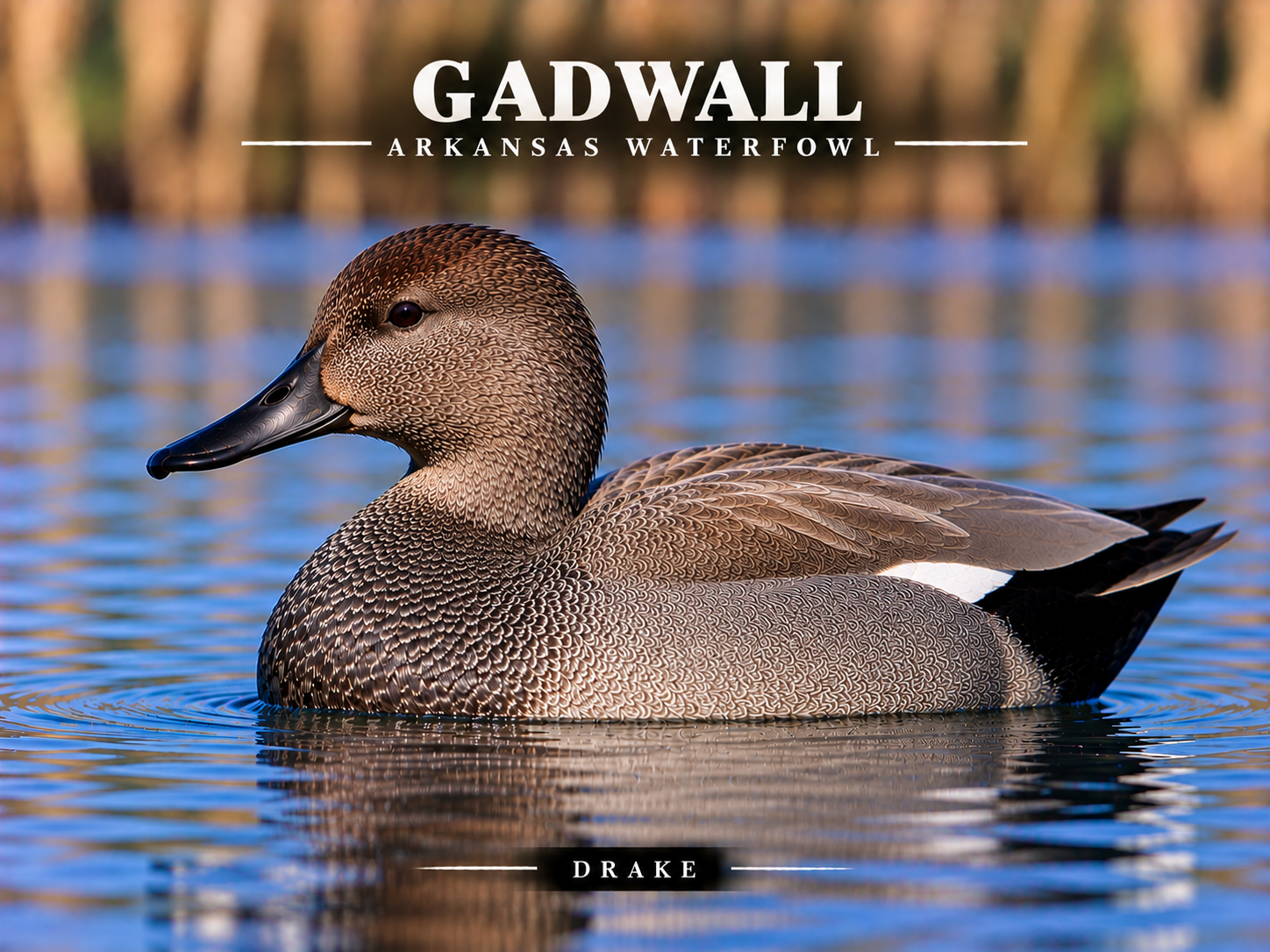
Ask an Arkansas duck hunter about “gray ducks” and they’re talking about gadwalls. Drakes are mostly gray with a black rear end and subtle patterning that looks much better in the hand than it does at 50 yards. Hens are brown and can resemble hen mallards, but gadwalls are generally slimmer and lack the mallard’s bold blue speculum.
They are common birds in Arkansas duck country and can show up in flooded agricultural ground, marshy water and other shallow-water habitat. Gadwalls can also become extremely good at recognizing hunting pressure. Later in the season, a group of gray ducks circling just outside the spread can test your patience.
Northern Pintail
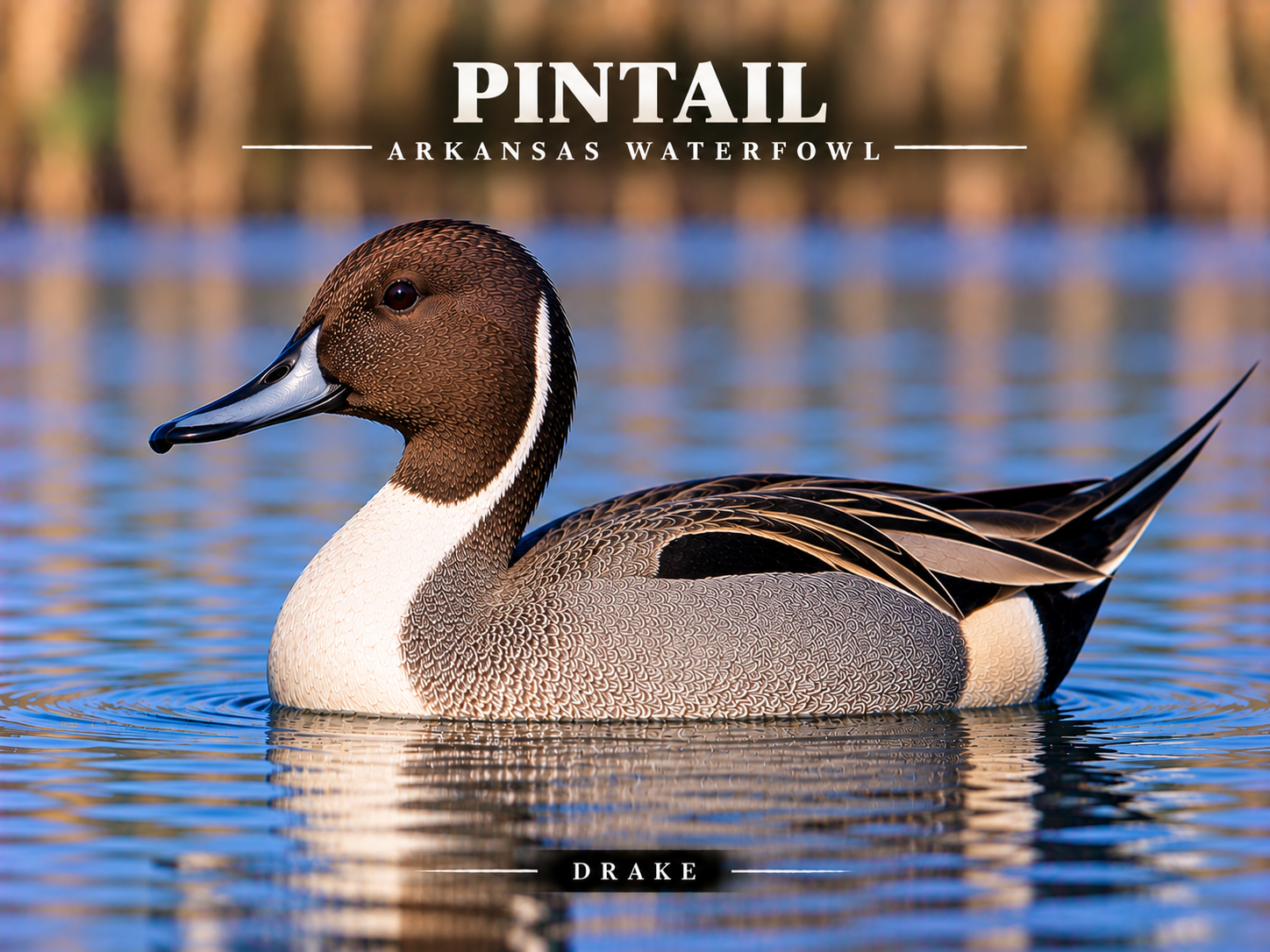
Few ducks are easier to recognize once you know their profile. A mature drake pintail has a chocolate-brown head, bright white breast and neck stripe, gray body and the long pointed tail that gives the bird its name. Hens are much more subdued brown.
In flight, look for a long neck, narrow wings and slender body. Pintails often look more streamlined than mallards and gadwalls. We see pintails using the open agricultural country around Stuttgart, and big groups of pintails working a flooded field are hard to mistake once you’ve watched them a few times.
Green-Winged Teal
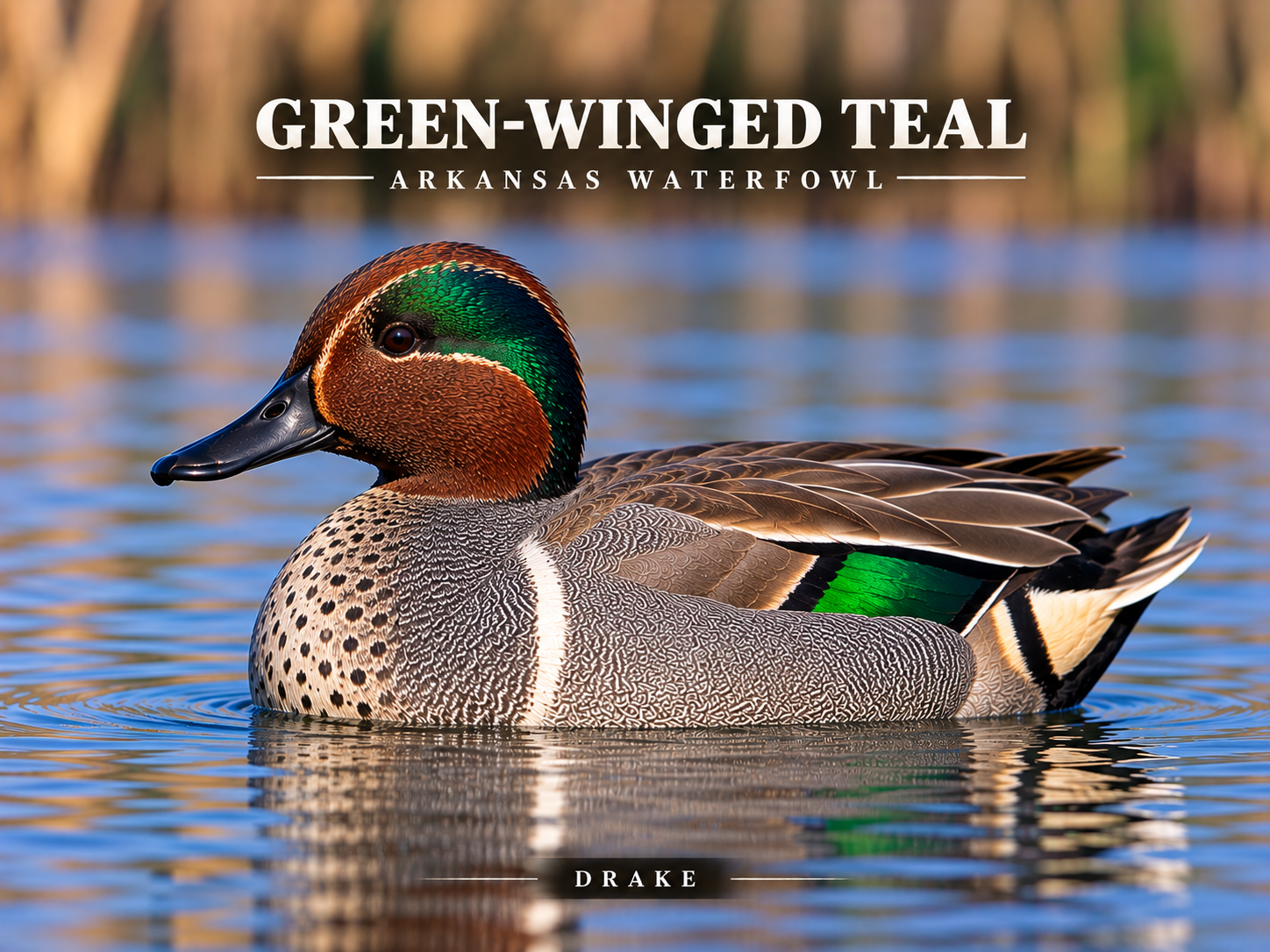
Green-wings are little ducks with a lot of speed. Drakes have a chestnut-colored head with a green patch sweeping back from the eye. Hens are mottled brown. Their small size is usually the first thing a hunter notices.
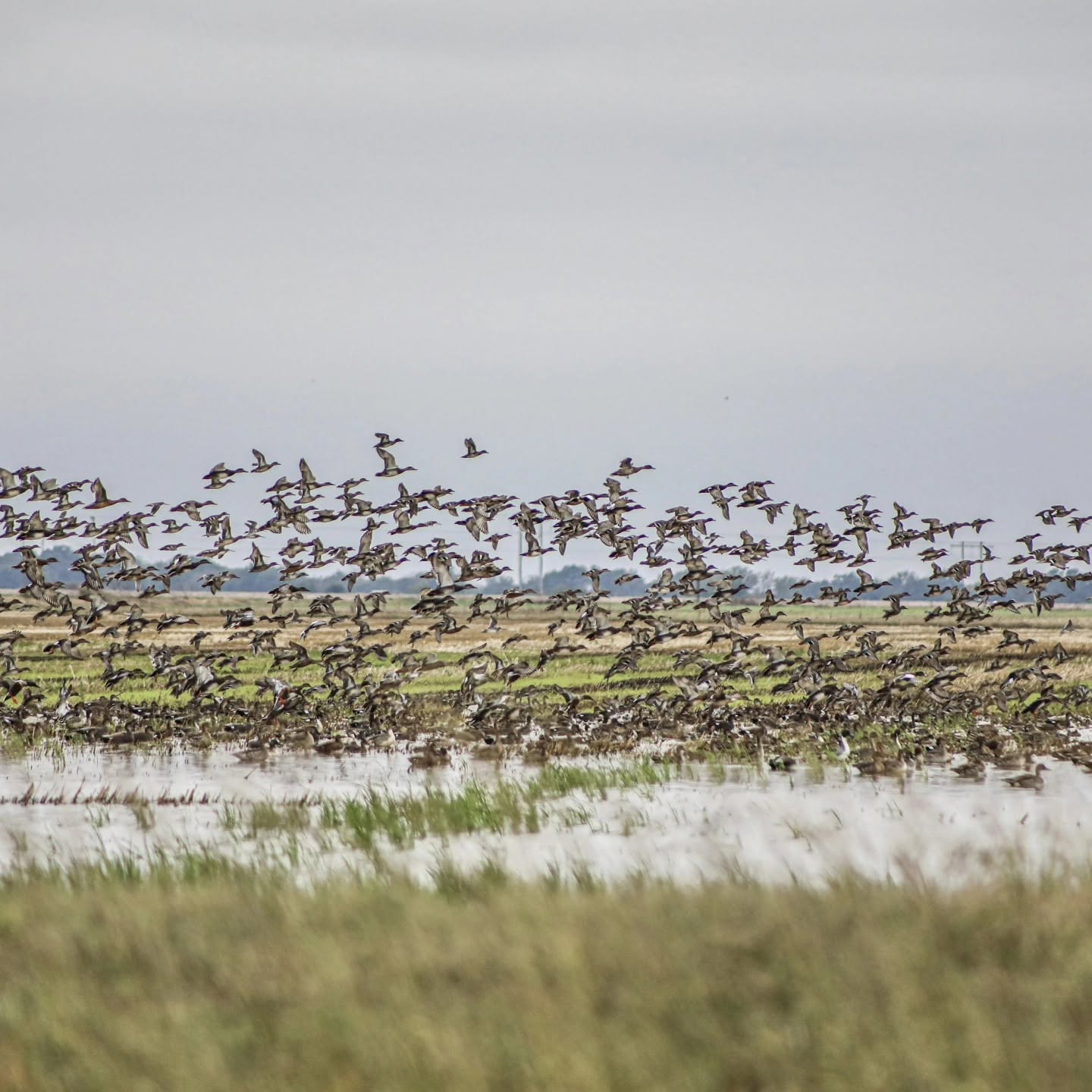
A flock of teal can come across a field low and fast, change direction almost instantly and be gone before somebody in the blind finishes asking what they are. Green-winged teal can remain part of the Stuttgart waterfowl mix through the regular season.
Blue-Winged Teal
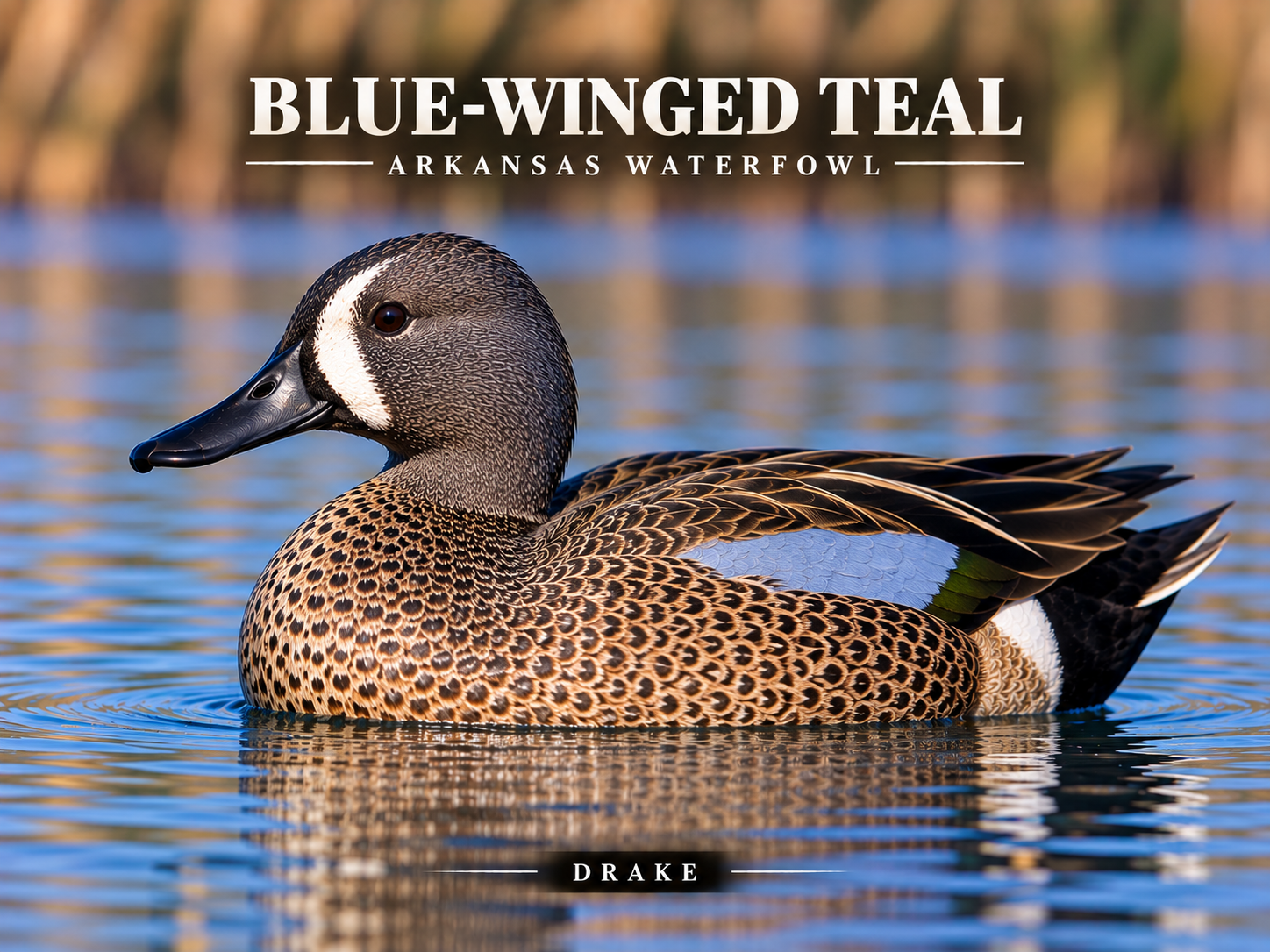
Blue-wings are especially important during the early migration. They are small ducks like green-wings, but the powder-blue patch on the upper wing is a major identifying feature. Breeding-plumage drakes also have the distinctive white crescent in front of the eye.
Blue-winged teal tend to migrate earlier than many of the ducks Arkansas hunters associate with the heart of winter. When a little bunch of ducks comes ripping across shallow water in September, blue-wings should be one of the first species on your mind.
American Wigeon
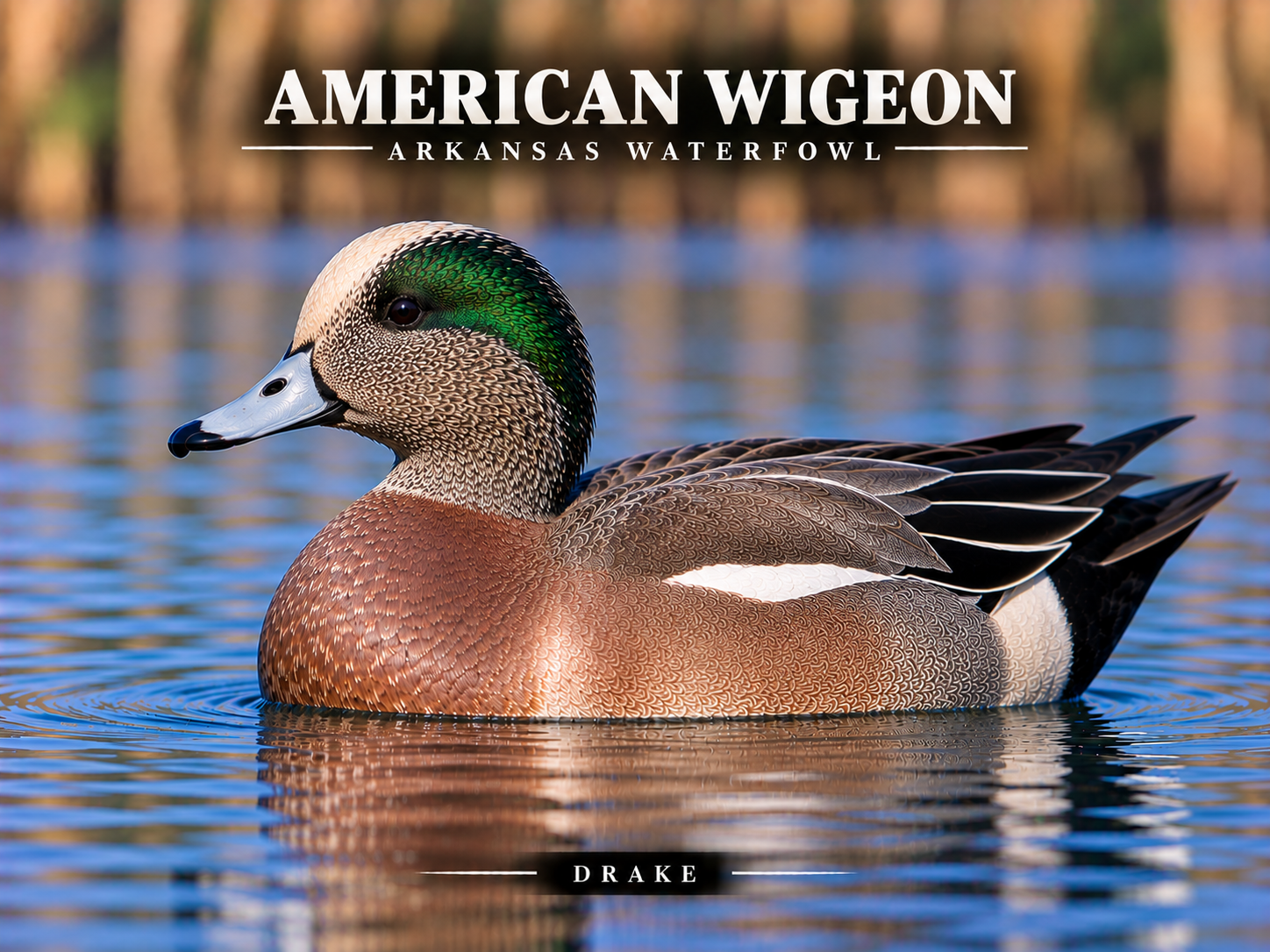
Wigeon are another puddle duck Arkansas hunters regularly encounter. A drake has a pale crown, green patch behind the eye and a short blue-gray bill tipped in black. The white shoulder patch on a drake can be noticeable in flight. Their whistle is one of the easiest ways to recognize wigeon when several species are moving around a field.
They may mix with other puddle ducks, so learning their profile and voice helps when a mixed group starts working the spread.
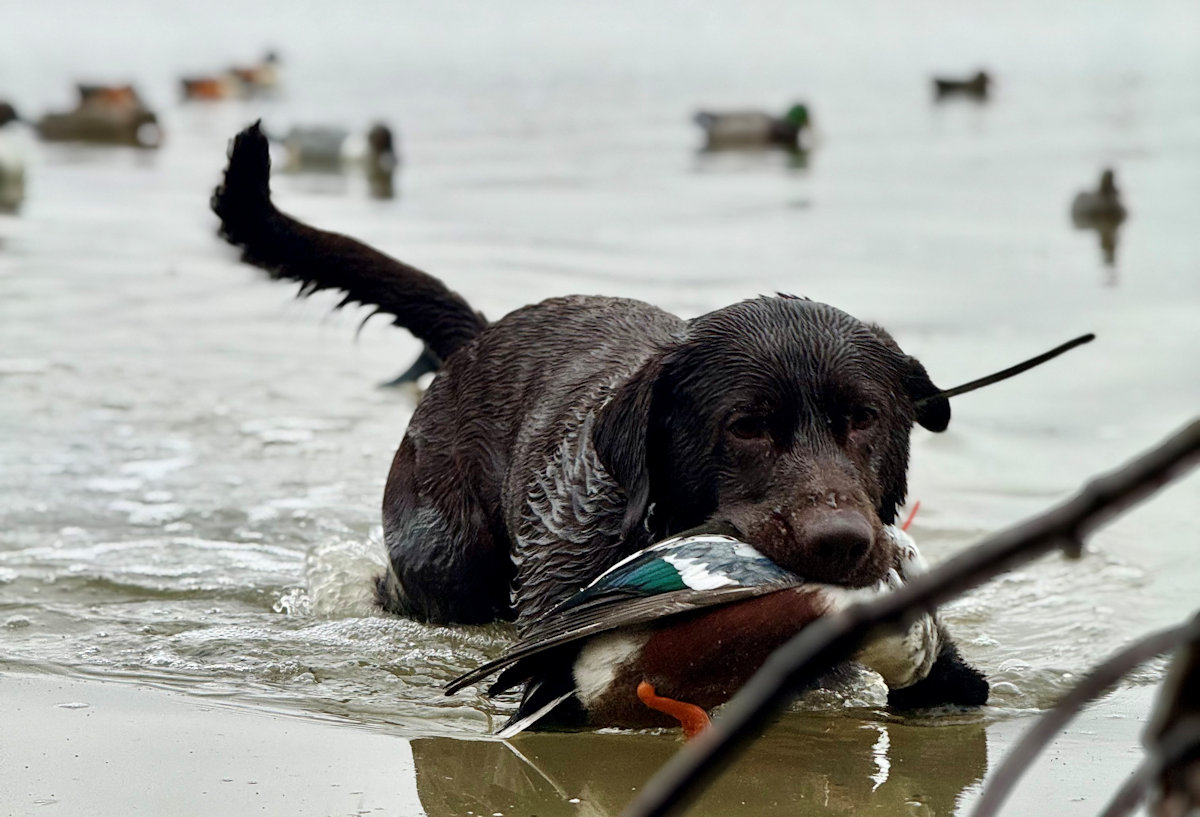
Northern Shoveler
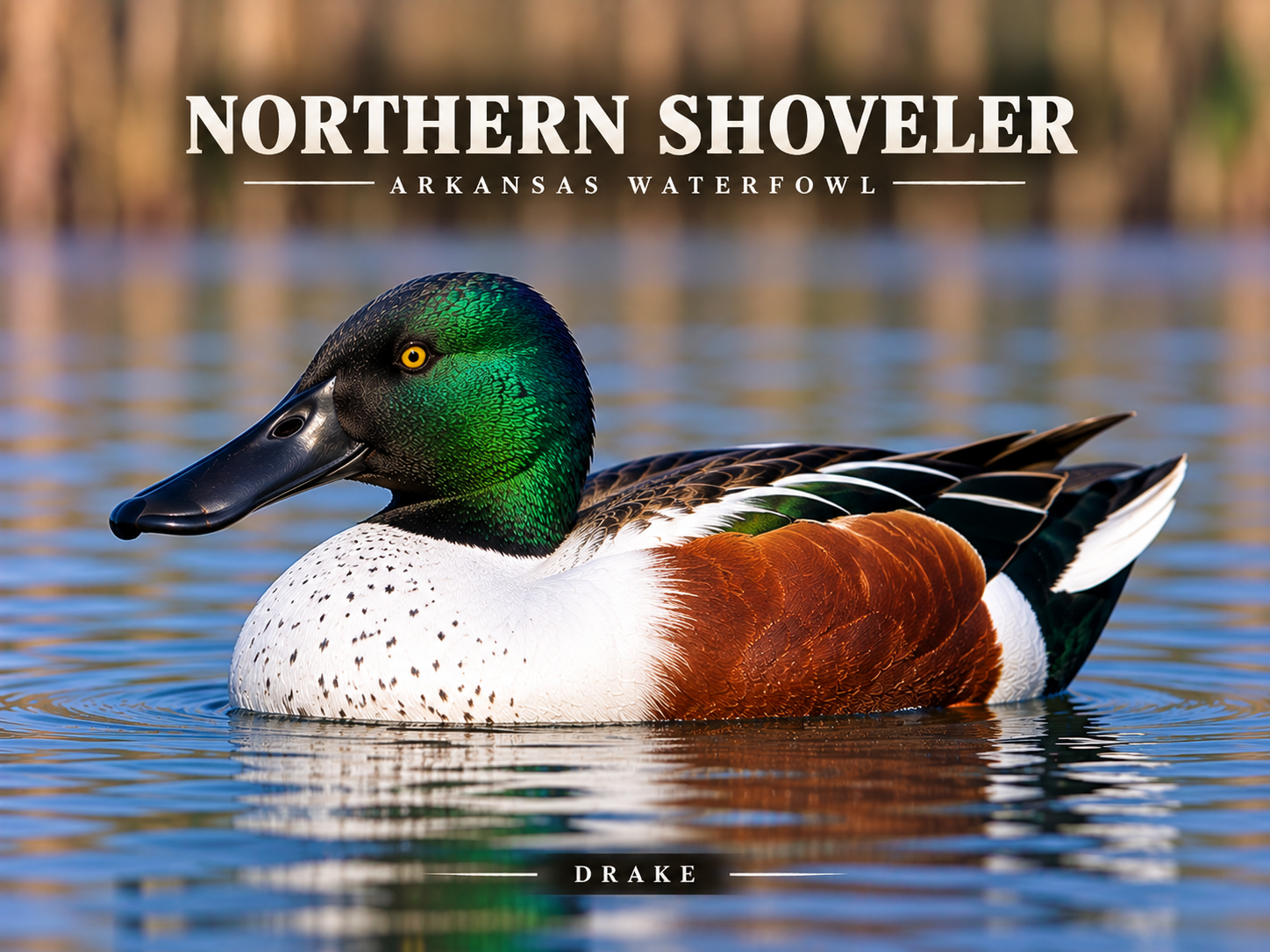
The northern shoveler is one of the easiest Arkansas ducks to identify up close because of its oversized spoon-shaped bill. A mature drake has a green head, white chest and rusty sides. Hens are mottled brown but carry the same oversized bill.
Hunters around Stuttgart usually just call them spoonbills. In flight, they can be confused with other puddle ducks at a distance, but their profile and bill become obvious as they get closer.
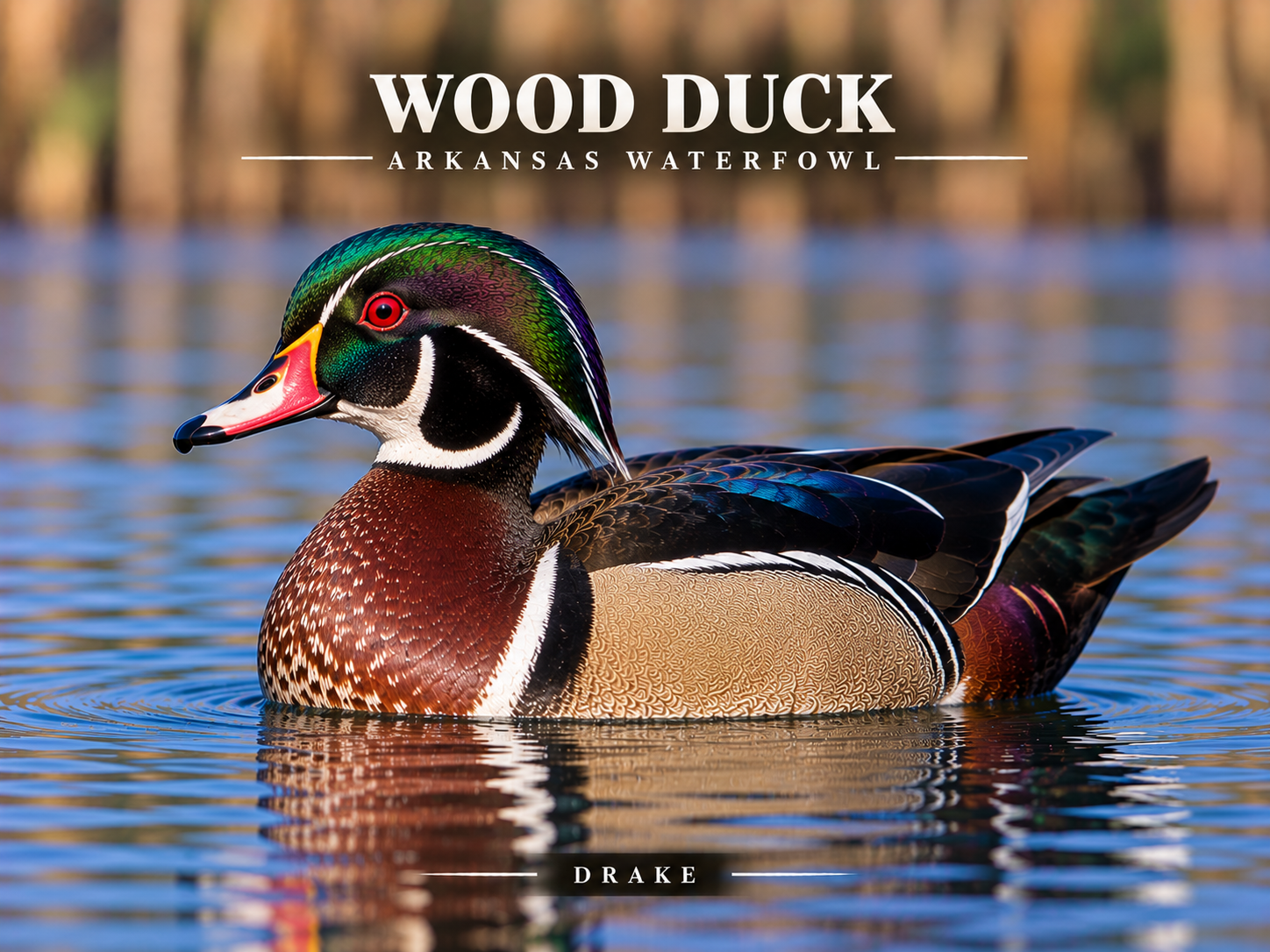
Wood Duck
Wood ducks fit Arkansas timber country perfectly. A mature drake is one of the most colorful ducks in North America, with an iridescent green-and-purple head, white facial markings and chestnut breast. Hens are gray-brown with a noticeable white eye ring.
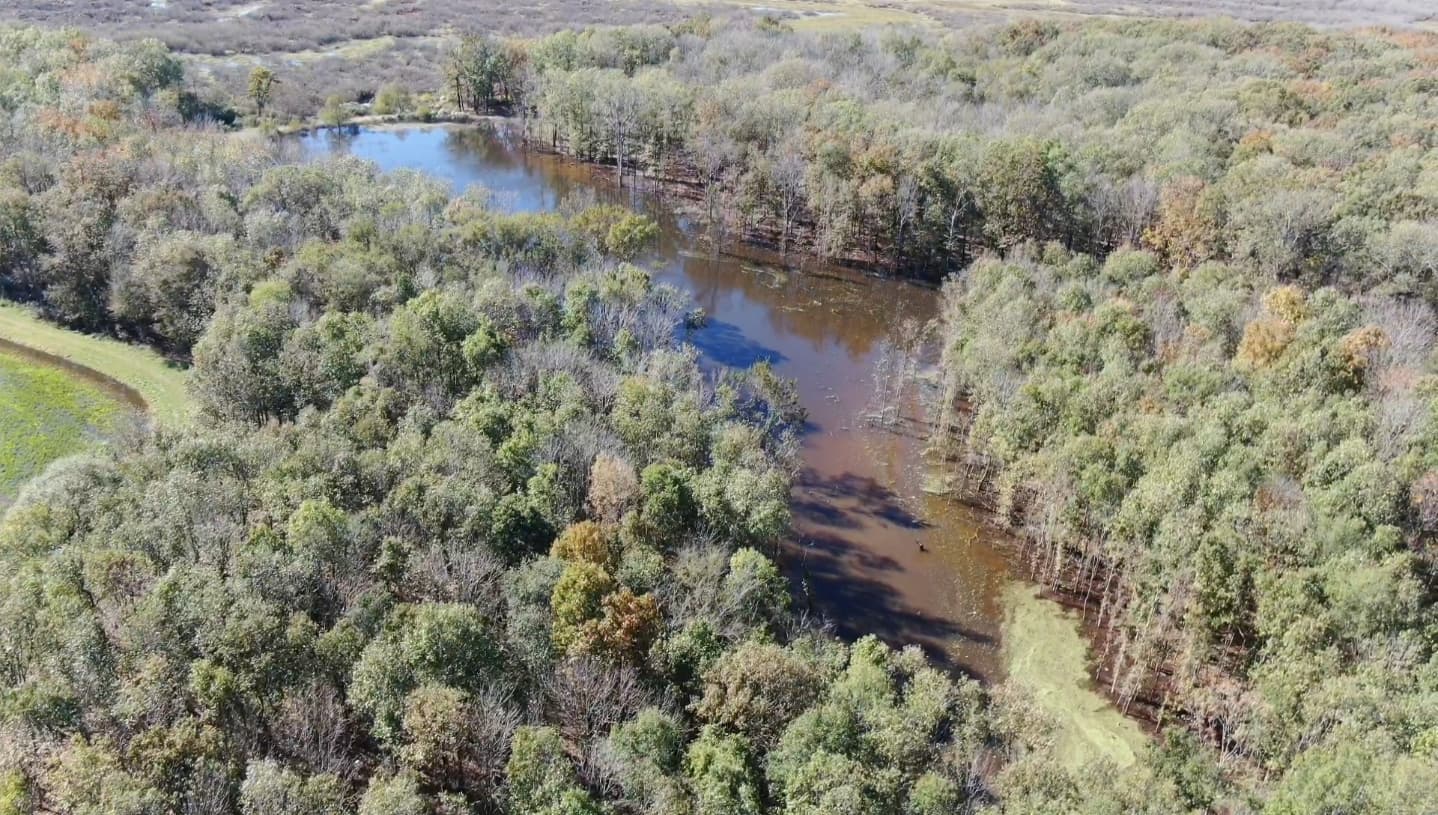
Wood ducks are smaller than mallards and are extremely maneuverable through wooded habitat. Around Stuttgart, you’re more likely to associate them with timber, sloughs, creeks and wooded water than wide-open rice fields.
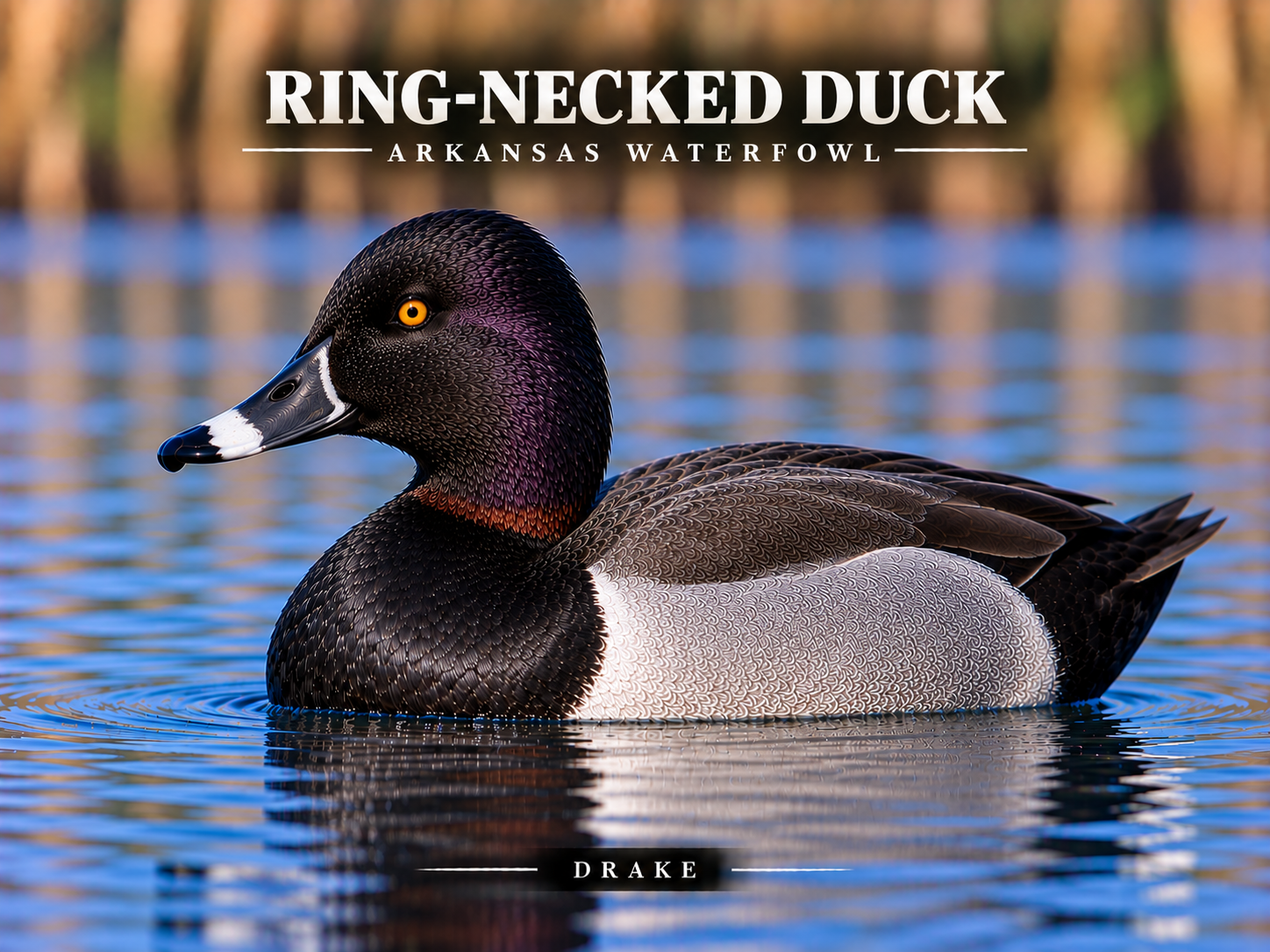
Ring-Necked Duck
Ringnecks are diving ducks and occasionally show up in impressive numbers around Stuttgart. Despite the name, the neck ring is not the easiest feature to see. Hunters are better off looking at the drake’s dark head and chest, gray sides and the noticeable white rings around the bill.
The peaked shape of the head is another useful clue. Unlike mallards and other puddle ducks that can spring almost straight off the water, diving ducks generally need more room to get moving.
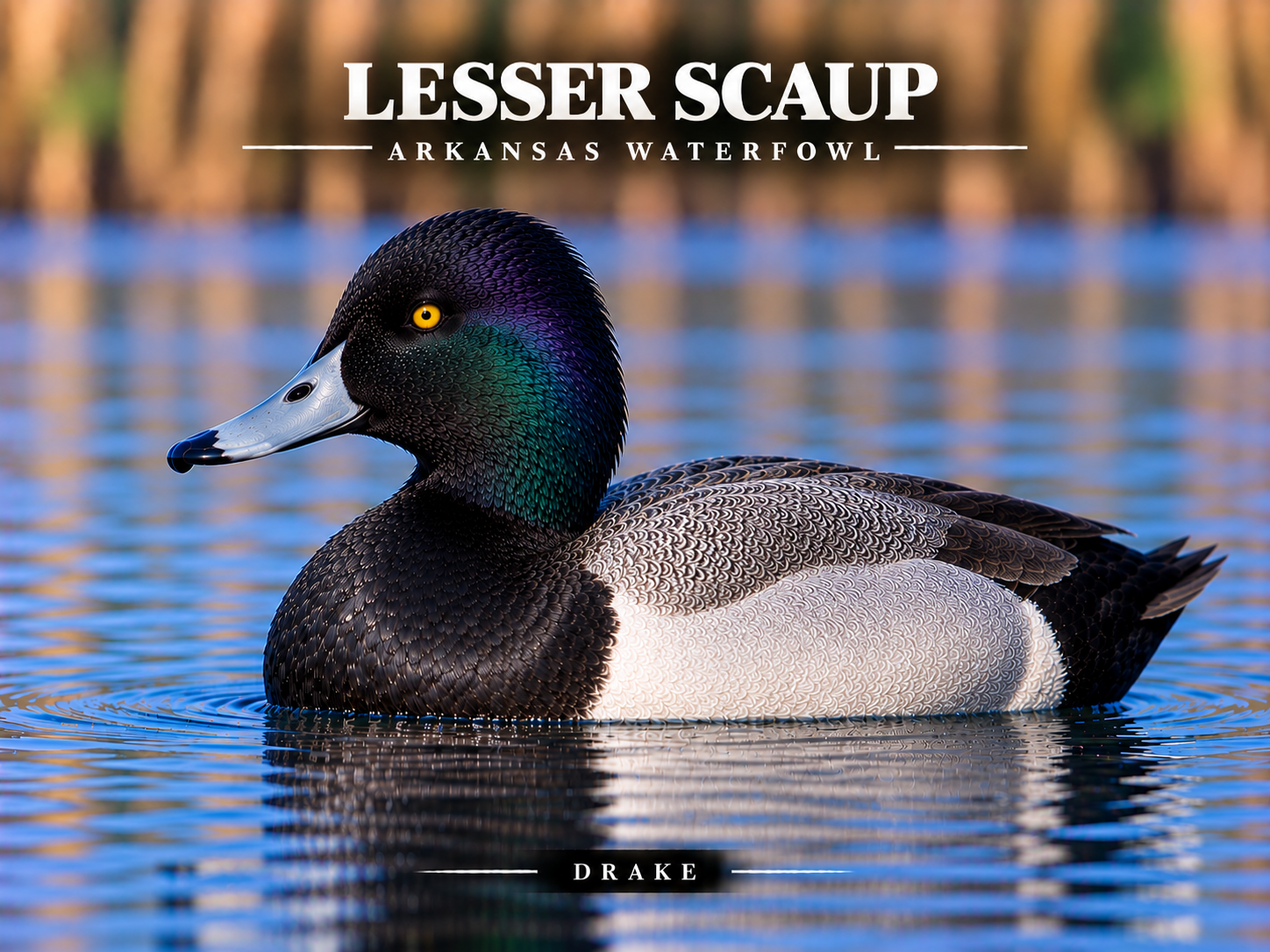
Lesser Scaup
Most hunters know scaup as bluebills.Drakes have dark heads and chests, pale gray backs, white sides and blue-gray bills. Hens are brown with a white patch near the base of the bill.
They’re diving ducks and are more likely to be associated with larger or deeper water than a classic flooded rice-field mallard setup. Scaup identification matters because Arkansas regulations can establish species-specific bag limits.
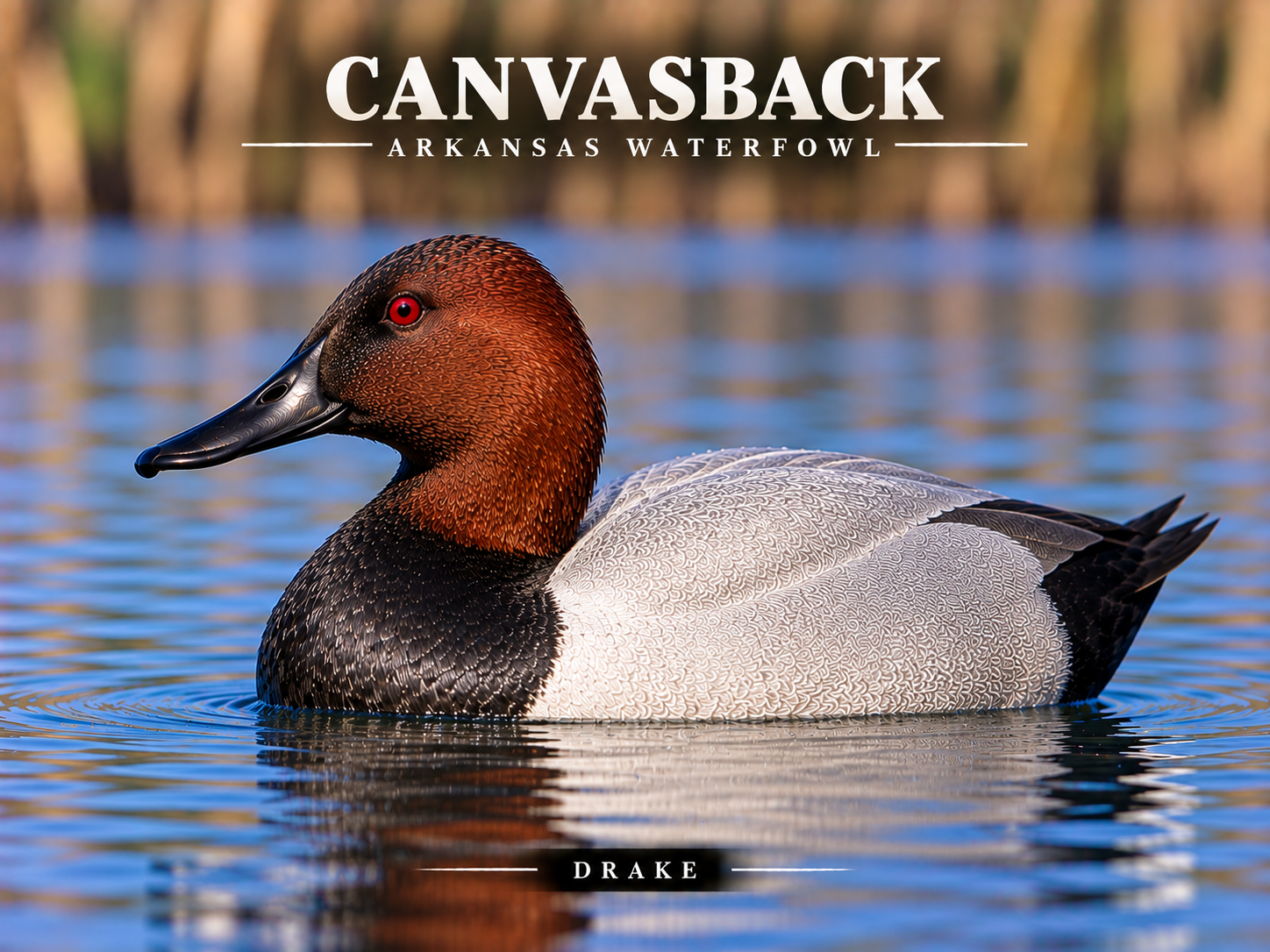
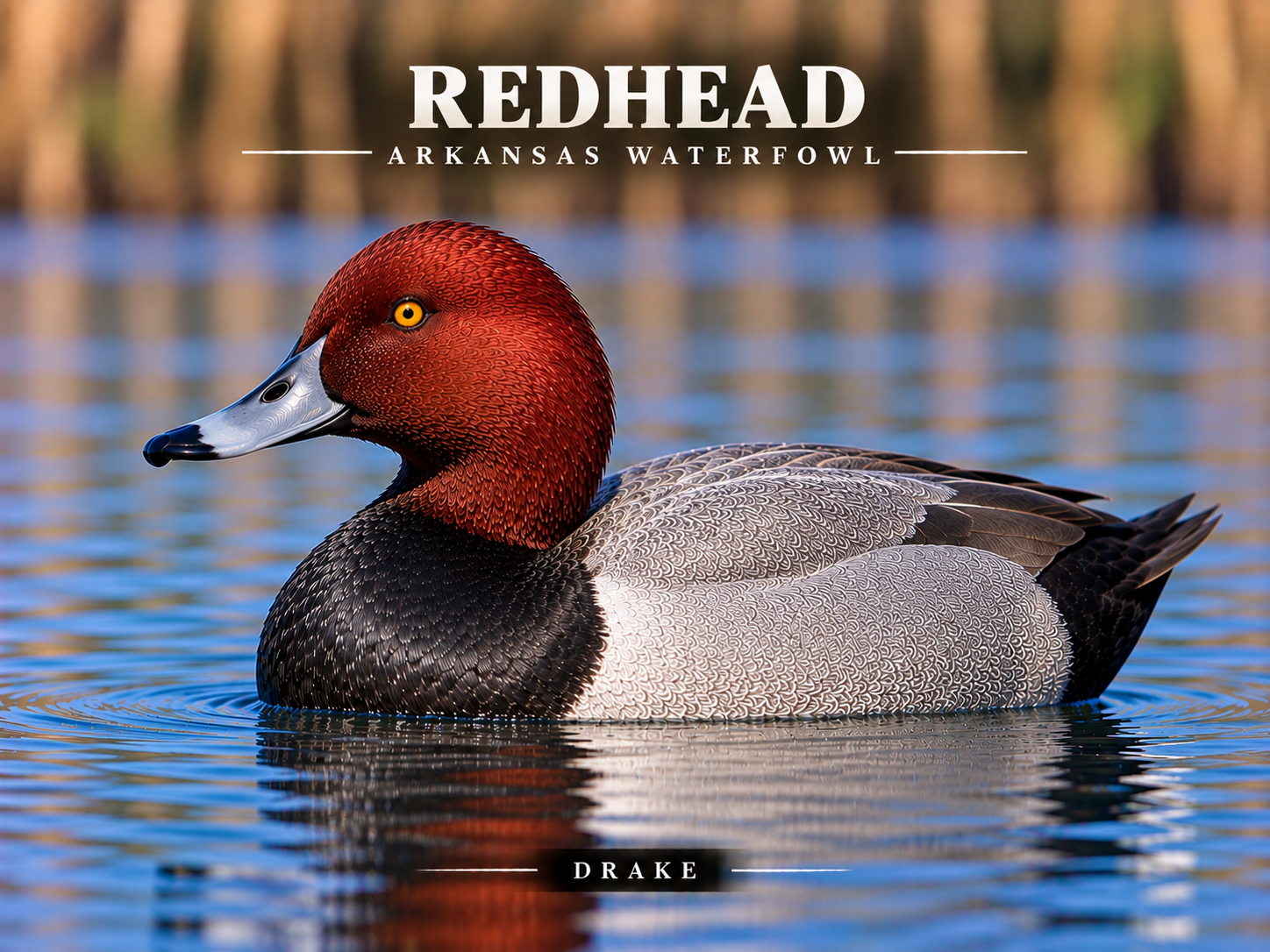
Canvasback & Redhead
These two deserve to be learned together because hunters can confuse them. A drake canvasback has a reddish head, black chest and pale body. The easiest clue is the long, sloping forehead and bill, which create an almost straight wedge-shaped profile.
A drake redhead also has a reddish head and dark chest, but his head is rounder and his bill has a more conventional duck profile. Both are diving ducks. When identifying them on the wing, body shape and head profile can be more useful than trying to judge shades of color at a distance.
Hooded Merganser & Other Occasional Ducks
Arkansas waterfowl country can produce plenty of birds beyond the species we see most often. Hooded mergansers are especially recognizable. A drake has a large black-and-white crest, dark body and chestnut sides. They favor wooded ponds, sloughs and similar habitat.
Hunters can also encounter buffleheads, ruddy ducks and other diving ducks. And occasionally something uncommon shows up. That’s one reason we don’t like teaching duck identification as nothing more than memorizing ten pictures. Learn the birds, identify what you’re shooting and never assume every duck in a mixed flock is the same species.
“Stuttgart may be famous for greenheads, but one morning in an Arkansas blind can put half a dozen different duck species in front of you.”
Identify the Duck Before You Shoot
Duck identification is more than knowing what is hanging on the strap after the hunt. Arkansas regulations can place different daily limits on individual duck species. Those regulations can also change from season to season.
That means the time to identify a duck is before the trigger is pulled.Experienced hunters learn silhouettes, flight styles, voices, flock behavior and habitat in addition to plumage. Always check current Arkansas Game and Fish Commission waterfowl regulations before hunting for current seasons, limits and identification requirements.